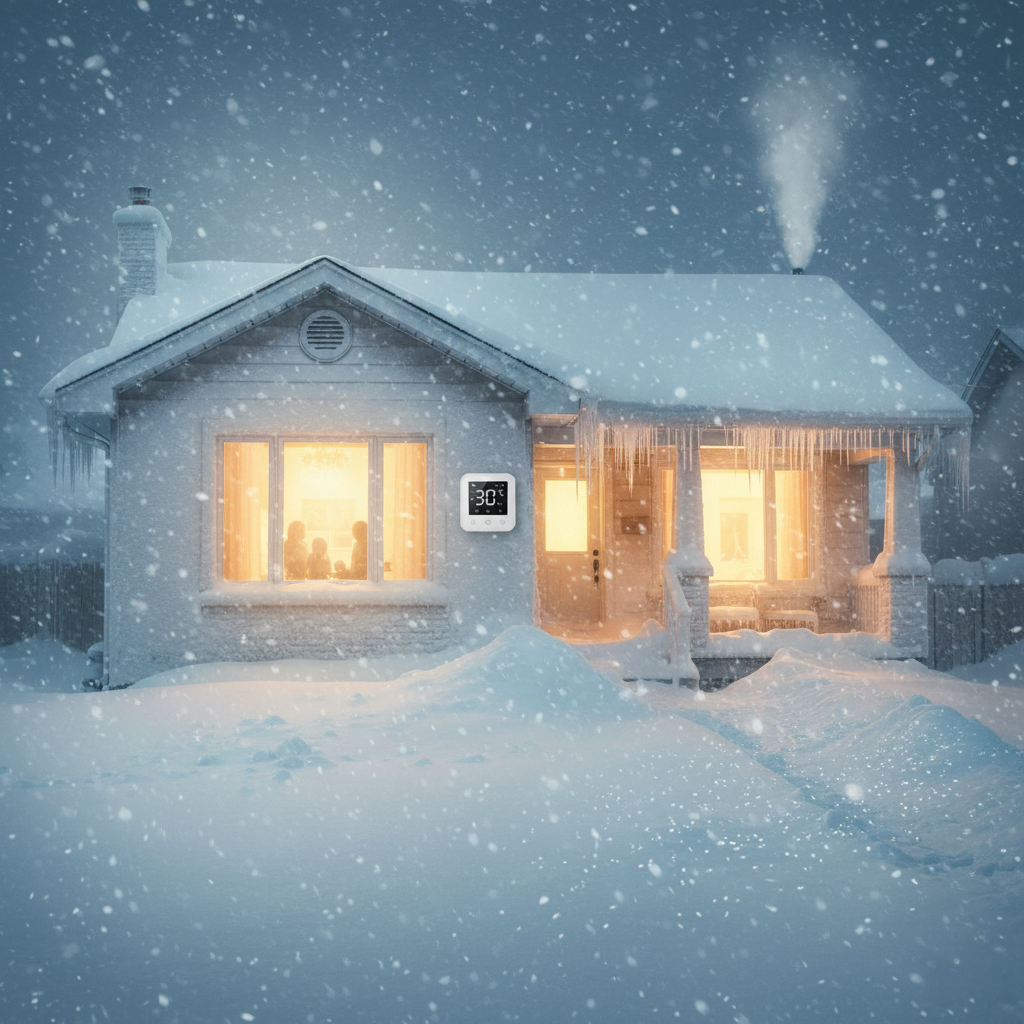
When Environment Canada issues an extreme cold warning and temperatures plummet to -20°C or colder, your furnace faces its toughest challenge of the year. These Arctic blasts, often called polar vortex events, put enormous stress on heating systems—and furnace breakdowns spike dramatically during these periods.
The good news is that with proper preparation, you can ensure your furnace handles extreme cold without failing. This guide will help you winterize your heating system, protect your home from freezing, and prepare for the worst-case scenario.
What Happens to Furnaces in Extreme Cold (-20°C to -30°C)
When temperatures drop to extreme levels, your furnace faces several challenges:
1. Extended Run Times
During extreme cold, your furnace may run almost continuously for hours or even days. This is actually normal and expected behavior.
- Normal temps (-5°C): Furnace cycles every 15-20 minutes
- Very cold (-15°C): Furnace runs 40-50 minutes per hour
- Extreme cold (-25°C): Furnace runs 50-60 minutes per hour
- Dangerous cold (-30°C+): Furnace may run continuously
This extended operation isn't harmful to your furnace if it's properly maintained, but it does expose any underlying issues.
2. Increased Fuel Consumption
Your natural gas or heating oil consumption can double or even triple during polar vortex events. This is normal—your home is losing heat faster than usual, and your furnace is working to keep up.
3. Intake and Exhaust Vent Challenges
High-efficiency furnaces have PVC intake and exhaust vents on exterior walls. During extreme cold:
- Ice buildup: Moisture from exhaust can freeze around the vent
- Snow blockage: Drifting snow can cover vents
- Condensation freezing: Internal condensate lines can freeze
Blocked vents trigger safety shutdowns, leaving you without heat at the worst possible time.
4. Component Stress
Continuous operation stresses furnace components:
- Blower motors overheat if filters are dirty
- Heat exchangers expand and contract more frequently
- Electronic components work harder to maintain operation
- Older furnaces may struggle to maintain temperature
Pre-Winter Preparation: Essential Steps
The time to prepare for extreme cold is before it arrives. Take these steps in early winter (November-December):
1. Schedule Professional Furnace Tune-Up
A professional inspection before winter catches problems before they become emergencies:
- Clean burners and flame sensors
- Test safety controls and sensors
- Check heat exchanger for cracks
- Measure gas pressure and adjust if needed
- Test carbon monoxide levels
- Lubricate blower motor
- Verify proper airflow
This $150-200 investment can prevent a $2,000+ emergency repair in January.
2. Install Fresh Furnace Filter
Start winter with a brand new filter. During extreme cold events, check your filter weekly—restricted airflow during extended run times can cause overheating.
3. Test Your Furnace Early
Don't wait for the first -20°C day to discover your furnace isn't working properly. Run your furnace for several hours in November to identify issues while HVAC companies aren't swamped with emergency calls.
4. Clear Exterior Vents
Locate your furnace's intake and exhaust vents (usually white PVC pipes on an exterior wall). Clear away any:
- Vegetation or shrubs within 2 feet
- Stored items or equipment
- Ice or snow from early winter storms
Mark vent locations with tall stakes so you can find them after heavy snowfall.
5. Seal Air Leaks
Your furnace can only heat the air that stays inside your home. Common air leak locations:
- Around windows and doors
- Attic hatches
- Basement rim joists
- Electrical outlets on exterior walls
- Where plumbing or wiring enters your home
Sealing these leaks can reduce your furnace's workload by 20-30% during extreme cold.
Protecting Pipes from Freezing
When temperatures drop below -15°C, frozen pipes become a serious risk—and they can lead to furnace problems if condensate lines freeze.
Vulnerable Pipe Locations:
- Exterior walls: Especially on north-facing walls
- Unheated spaces: Garages, crawl spaces, attics
- Kitchen and bathroom sinks: On exterior walls
- Furnace condensate drain: Can freeze if runs through cold area
Freeze Prevention Strategies:
Before Extreme Cold Arrives:
- Insulate pipes in unheated areas with foam pipe insulation
- Seal air leaks in walls where pipes run
- Install heat tape on vulnerable pipes (follow manufacturer instructions carefully)
- Disconnect and drain garden hoses
- Close foundation vents if you have a crawl space
During Extreme Cold Events:
- Open cabinet doors under sinks on exterior walls to allow warm air circulation
- Let faucets drip slightly (pencil-lead thickness) overnight
- Keep garage doors closed if water lines run through garage
- Maintain temperature above 15°C even when away
- Check furnace condensate drain isn't frozen
Furnace Condensate Line Protection:
High-efficiency furnaces produce water (condensate) that drains through a small tube. If this freezes:
- Water backs up into furnace
- Safety switch shuts system down
- You lose heat during extreme cold
Prevention: Ensure condensate line is properly insulated if it passes through cold areas, and verify it drains to a floor drain or sump pump, not outside where it can freeze.
Emergency Heat Alternatives
If your furnace fails during extreme cold, you need backup plans. Here are safe alternatives:
Safe Emergency Heating Options:
1. Electric Space Heaters
- Keep one or two quality space heaters on hand
- Use only CSA-approved models with tip-over protection and overheat shutoff
- Never use extension cords—plug directly into wall outlets
- Can heat 150-300 sq ft each
- Close off unused rooms to conserve heat
2. Fireplace (If You Have One)
- Wood-burning or gas fireplaces provide localized heat
- Keep damper open and ensure proper ventilation
- Can heat main living area while you wait for repairs
- Never leave fires unattended
3. Seal Off Rooms
- Close doors to unused bedrooms, basement, upper floors
- Hang blankets over doorways
- Focus heat in one or two rooms where family gathers
4. Emergency Shelter
- If temperature drops below 10°C inside, consider staying with family, friends, or a warming center
- Toronto operates warming centers during extreme cold warnings
- Hotel stay is cheaper than frozen pipe repairs
DANGEROUS Heating Methods—NEVER Use:
- BBQ or camping stoves indoors: Carbon monoxide poisoning risk
- Oven or stove for heat: Fire hazard and carbon monoxide danger
- Portable generators indoors: Deadly carbon monoxide levels
- Non-electric heaters without ventilation: Oxygen depletion and carbon monoxide
Emergency Furnace Service During Extreme Cold
When your furnace fails during a polar vortex event, you need fast, reliable emergency service. Aire Master Heating and Cooling provides 24/7 emergency furnace repair throughout Toronto and the GTA. We prioritize extreme cold emergencies to get your heat restored as quickly as possible.
Call our emergency line: (416) 995-4747
Carbon Monoxide Safety in Extreme Cold
Carbon monoxide (CO) risks increase during extreme cold because:
- Furnaces run continuously, increasing exposure to any leaks
- Homes are sealed tight with no fresh air exchange
- Blocked vents can cause backdrafting
- Cracked heat exchangers are under maximum stress
Carbon Monoxide Detectors:
Before winter:
- Install CO detectors on every level of your home
- Place one near your furnace
- Place one outside sleeping areas
- Test detectors monthly
- Replace batteries annually
- Replace entire units every 7-10 years
Carbon Monoxide Symptoms:
- Headache
- Dizziness
- Nausea
- Confusion
- Flu-like symptoms without fever
If CO detector alarms:
- Evacuate everyone immediately
- Call 911 from outside
- Don't re-enter until emergency services clear your home
- Have furnace inspected before using again
When to Worry: Furnace Struggling Signs
During extreme cold, distinguish between normal operation and signs of trouble:
Normal During Extreme Cold:
- Furnace running almost continuously
- Indoor temperature 1-2 degrees below thermostat setting
- Slightly higher energy bills
- More frequent cycling than usual
Warning Signs—Call for Service:
- Can't maintain 18°C: Furnace undersized or failing
- Frequent shutdowns: Safety controls tripping
- Yellow or orange burner flame: Dangerous incomplete combustion
- Excessive cycling: On and off every few minutes
- Strange odours: Gas, burning, or unusual smells
- Loud banging or grinding: Component failure
- Ice on exterior vents: Blockage causing problems
Maintaining Consistent Temperature
During extreme cold events, how you use your thermostat matters:
Best Practices:
Keep Temperature Steady
- Don't turn thermostat down at night during extreme cold
- Set one temperature (19-21°C) and leave it
- Changing temperature makes furnace work harder to catch up
- Consistent temp prevents frozen pipes
Never Let Temperature Drop Below 15°C
- Even if away for the day
- Pipe freezing risk increases dramatically below this threshold
- Reheating a cold house costs more than maintaining temperature
Don't Set Thermostat Above 22°C
- Won't heat your home faster
- Just causes furnace to run longer
- Layer clothing instead of cranking heat
If Your Home Isn't Reaching Set Temperature:
During -25°C weather, if your home struggles to stay warm:
- Check filter first: Dirty filter is most common cause
- Verify all vents are open: Closed vents reduce system capacity
- Check exterior vents: Clear snow and ice blockages
- Close off unused rooms: Focus heat where you need it
- Use supplemental heat: Space heaters in main living areas
- Add window insulation: Plastic film kits reduce heat loss
If problems persist, call for professional assessment—your furnace may be undersized for your home.
Toronto Polar Vortex Preparation Checklist
When Environment Canada issues an extreme cold warning, take these steps:
24-48 Hours Before:
- Install fresh furnace filter
- Clear snow from exterior vents
- Stock emergency supplies (flashlights, batteries, space heater)
- Ensure you have HVAC company contact info handy
- Check carbon monoxide detectors
- Fill bathtubs with water (emergency supply if pipes freeze)
- Charge phone in case power fails
During Extreme Cold Event:
- Monitor furnace operation
- Check exterior vents daily for ice/snow buildup
- Keep garage doors closed
- Open cabinet doors under sinks overnight
- Let faucets drip if necessary
- Maintain consistent indoor temperature
- Listen for unusual furnace sounds
Emergency Supplies to Have Ready:
- Two electric space heaters (tested and working)
- Flashlights and batteries
- Blankets and warm clothing
- Bottled water (in case pipes freeze)
- Non-perishable food
- Phone numbers for HVAC emergency service, utility companies, warming centers
- Backup power bank for phone charging
Final Thoughts
Toronto winters can be brutal, and polar vortex events test your home's heating system to its limits. The key to surviving extreme cold isn't hoping your furnace holds up—it's preparing before Arctic air arrives.
Schedule that pre-winter tune-up. Change your filter. Clear your vents. Know what to do if something goes wrong. These simple steps can mean the difference between staying comfortable and dealing with a frozen home in -30°C weather.
Most importantly, don't ignore warning signs. If your furnace is struggling, making unusual sounds, or behaving oddly, address it before the next cold snap—not during it when HVAC companies are overwhelmed with emergency calls.
Stay warm, stay safe, and stay prepared. Toronto winters are tough, but with a well-maintained furnace and good preparation, you'll weather every polar vortex event without worry.