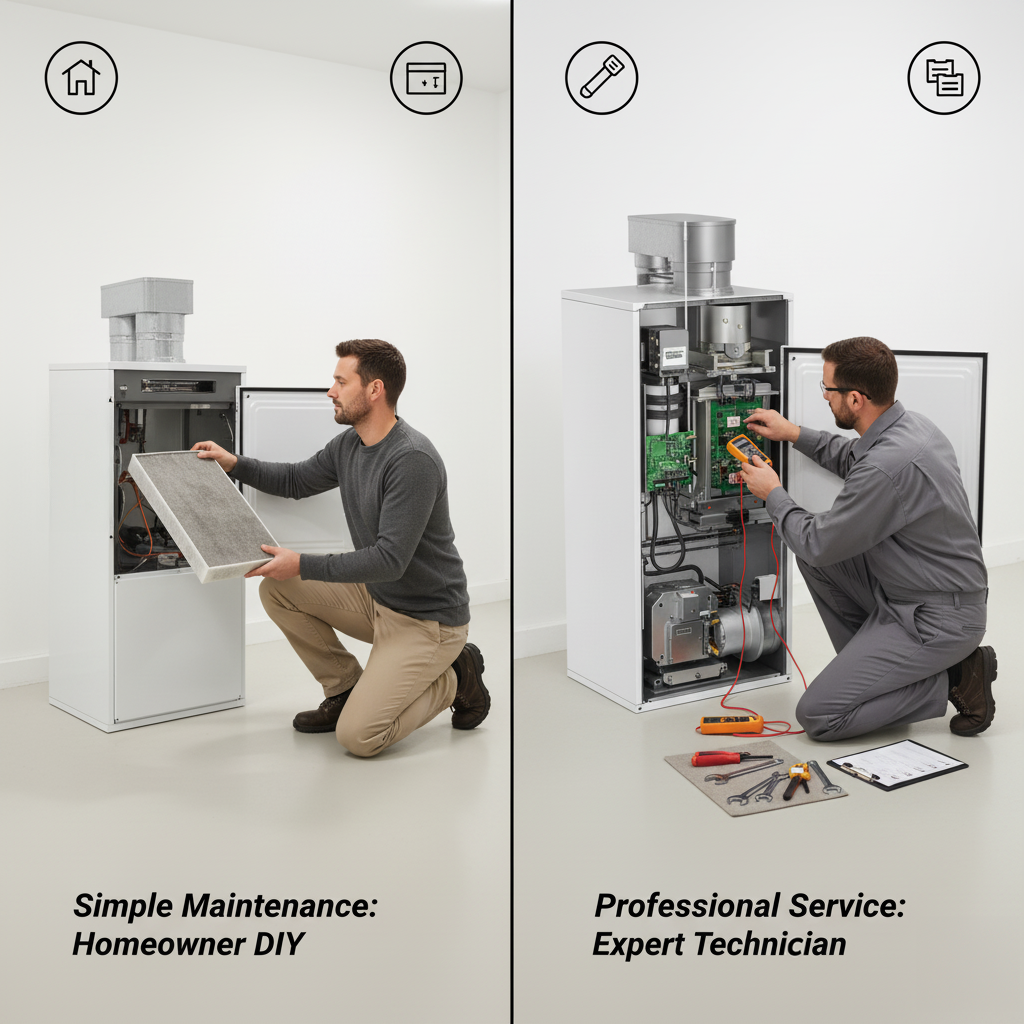
In Toronto, where furnaces run nearly six months of the year and face some of Canada's harshest winter conditions, proper maintenance isn't optional—it's essential. A well-maintained furnace keeps your family warm and safe, operates efficiently to control costs, and lasts years longer than a neglected system.
But what exactly should you be doing to maintain your furnace? This comprehensive checklist divides tasks into two categories: DIY monthly maintenance that every homeowner can handle, and annual professional maintenance that requires specialized expertise and equipment.
By following this complete maintenance schedule, you'll maximize your furnace's performance, minimize costly repairs, and ensure reliable operation throughout Toronto's demanding winter season.
DIY Monthly Maintenance Tasks
These tasks take just minutes but have a tremendous impact on your furnace's efficiency, longevity, and reliability. Perform them monthly during the heating season (October through March).
1. Check and Replace Air Filters
This is the single most important maintenance task you can perform.
How to do it:
- Locate your filter (usually in the return air duct or blower compartment)
- Turn off your furnace before removing the filter
- Hold the filter up to light—if you can't see through it, it needs replacement
- Note the filter size (printed on the frame) and airflow direction arrow
- Install the new filter with arrows pointing toward the furnace
Why it matters: A dirty filter is the leading cause of furnace problems. It restricts airflow, forcing your system to work harder, waste energy, and potentially overheat. Restricted airflow can also damage the heat exchanger—one of your furnace's most expensive components.
Replacement frequency: Check monthly and replace every 1-3 months depending on:
- Filter quality (cheaper filters need more frequent replacement)
- Pets in the home (increases particle load)
- Allergies or asthma (requires cleaner air, more frequent changes)
- Home construction or renovations (creates extra dust)
- How dusty your Toronto neighbourhood is
2. Inspect and Clean Vents and Registers
How to do it:
- Walk through your home with a vacuum cleaner
- Remove vent covers and vacuum inside the ductwork opening (reach as far as safely possible)
- Wipe down vent covers and grills
- Ensure furniture, curtains, or rugs aren't blocking any vents
- Verify all vents are fully open
Why it matters: Blocked vents create pressure imbalances in your system, reduce efficiency, cause uneven heating, and can damage your furnace. Many homeowners mistakenly close vents in unused rooms, thinking it saves energy—it actually creates problems and wastes money by disrupting system balance.
3. Check Your Thermostat Operation
How to do it:
- Verify the displayed temperature matches an independent thermometer
- Test that the furnace responds when you adjust the temperature setting
- For battery-powered thermostats, replace batteries annually (set a reminder for the same time each year)
- Ensure the thermostat is level and securely mounted
- Keep the thermostat area clear (no lamps, electronics, or drafts nearby that could affect readings)
Why it matters: Your thermostat is your furnace's control center. If it's not reading temperature accurately or responding properly, your entire system's performance suffers. Dead batteries or a malfunctioning thermostat can leave you without heat.
4. Listen for Unusual Sounds
How to do it: Once a month, stand near your furnace while it runs through a complete cycle (startup, running, shutdown). Listen for any sounds that seem unusual or new.
Sounds to watch for:
- Banging or booming (delayed ignition)
- Screeching or squealing (belt or motor bearings)
- Rattling (loose components or ductwork)
- Clicking that continues after startup (electrical issues)
- Rumbling after burner shuts off (potential heat exchanger crack)
Why it matters: Strange sounds are often the first warning sign of developing problems. Catching these early allows for simple repairs before they become expensive failures.
5. Visually Inspect Visible Ductwork
How to do it:
- Examine all visible ducts in your basement or crawl space
- Look for disconnected sections, gaps, or holes
- Check for excessive dust buildup around connections
- Watch for signs of moisture, rust, or mould
- Verify that duct tape (if present) isn't deteriorating
Why it matters: Duct leaks waste heated air—and your money. Some homes lose 20-30% of heated air through ductwork problems. Leaks also allow dust and contaminants into your air supply.
6. Keep the Furnace Area Clear
How to do it: Maintain at least three feet of clearance around your furnace. Remove stored items, boxes, cleaning supplies, laundry, or any combustible materials.
Why it matters: Furnaces need proper air circulation for safe, efficient operation. Blocked airflow can cause overheating and fire hazards. Many municipalities have fire codes requiring specific clearances—violations can affect insurance claims.
7. Check Exterior Vents (High-Efficiency Furnaces)
How to do it: If you have a high-efficiency furnace with PVC exhaust and intake pipes exiting your home's exterior:
- Locate these pipes (usually white PVC, 2-4 inches diameter)
- Check for blockages from snow, ice, leaves, or debris
- After heavy snowfall, immediately clear snow away from vent openings
- Verify pipes aren't damaged or disconnected
Why it matters: Blocked intake or exhaust vents cause immediate furnace shutdown. In Toronto winters, snow accumulation can quickly block these vents. More seriously, blocked vents can create dangerous carbon monoxide situations.
Annual Professional Maintenance Tasks
While DIY maintenance is important, certain tasks require professional expertise, specialized tools, and safety equipment. Schedule professional maintenance every fall—ideally in September or early October before the heating season rush.
Comprehensive Safety Inspections
Professional technicians perform critical safety checks that homeowners cannot:
Heat Exchanger Inspection: Using specialized cameras and tools, technicians inspect for cracks or corrosion in the heat exchanger. Even tiny cracks can leak deadly carbon monoxide into your home—this is one of the most critical safety inspections.
Gas Connection Testing: Technicians use gas detection equipment to check all connections for leaks. They verify proper gas pressure and ensure connections are secure.
Ventilation System Verification: Professionals test that combustion gases properly exit your home and that makeup air is adequate. They check flue pipes for corrosion, blockages, or improper slope.
Carbon Monoxide Testing: Using sensitive CO detectors, technicians measure carbon monoxide levels during operation to ensure safe combustion.
Flame Sensor Inspection: Technicians clean and test flame sensors that prevent gas from flowing when there's no flame present—a critical safety device.
Performance Optimization
Professionals optimize your system for maximum efficiency and reliability:
Burner Cleaning and Adjustment: Technicians remove and clean burners, adjust for optimal fuel-to-air ratio, and verify proper flame characteristics (should be steady and blue).
Blower Assembly Cleaning: The blower wheel accumulates dust and debris that reduces airflow and efficiency. Professional cleaning restores proper airflow.
Motor Lubrication: Moving parts require annual lubrication to prevent premature wear and reduce operating noise.
Electrical Connection Inspection: Technicians check all electrical connections for tightness, corrosion, and proper function. Loose connections cause system failures and fire hazards.
Thermostat Calibration: Professionals verify your thermostat accurately reads temperature and communicates properly with your furnace.
Airflow Measurement and Adjustment: Using specialized instruments, technicians measure airflow and adjust blower speed to ensure optimal performance.
System Cycling Testing: Technicians observe complete heating cycles to verify proper startup, operation, and shutdown sequences.
Efficiency Improvements
Annual maintenance includes tasks that maximize your furnace's efficiency:
Combustion Analysis: Technicians measure combustion efficiency to ensure your furnace is burning fuel optimally. Even small improvements in combustion efficiency translate to significant energy savings over a winter.
Condensate Drainage Inspection: For high-efficiency furnaces, technicians clean condensate drains and verify proper drainage to prevent water damage and system shutdown.
Belt Inspection and Adjustment: For furnaces with belt-driven blowers, technicians check belt tension and condition, replacing worn belts before they fail.
Ductwork Sealing: Many professional maintenance visits include basic duct sealing to reduce air leaks and improve system efficiency.
Filter Housing Inspection: Technicians verify your filter housing seals properly—even small gaps allow dust to bypass the filter and accumulate in your system.
Schedule Your Annual Furnace Maintenance
Don't wait until your furnace fails to call for service. Aire Master Heating and Cooling provides comprehensive annual furnace maintenance for Toronto homeowners, covering all the professional tasks outlined above.
Our certified technicians have the expertise, tools, and experience to keep your heating system running safely and efficiently all winter long. We'll catch problems before they become emergencies and optimize your system for maximum performance.
Call us today at (416) 995-4747 to book your annual maintenance appointment, or request a quote online.
Seasonal Timing Recommendations for Toronto Homeowners
Timing your maintenance properly ensures you're always prepared for Toronto's climate demands:
September - Early October (Best Time)
- Schedule professional annual maintenance
- HVAC companies are less busy (easier scheduling, sometimes better pricing)
- Weather is still mild if repairs are needed and furnace must be offline
- Plenty of time to address any issues discovered before cold weather
October (Still Good)
- Complete any DIY pre-winter preparation
- Test your furnace before you actually need it
- Stock up on air filters for the winter
- Test all carbon monoxide detectors
November - March (Heating Season)
- Perform monthly DIY maintenance tasks
- Check exterior vents after each snowfall
- Monitor system performance and energy bills
- Address any problems immediately (don't wait until spring)
April - May (Post-Season)
- Final filter change after heating season
- Note any issues that arose during winter for next fall's maintenance appointment
- Clean area around furnace now that it won't be running
Cost Savings of Preventive Maintenance
Some Toronto homeowners hesitate to invest in regular maintenance, viewing it as an unnecessary expense. The reality is that maintenance saves money:
Energy Savings: A well-maintained furnace operates 15-20% more efficiently than a neglected one. For a typical Toronto home spending $1,500 per winter on heating:
- Neglected furnace: $1,500 annual heating cost
- Maintained furnace: $1,250-$1,275 annual heating cost
- Annual savings: $225-$250
Repair Cost Avoidance: Regular maintenance catches small problems before they become expensive failures:
- Annual professional maintenance: $150-$200
- Average emergency repair avoided: $500-$1,500
- Major component failure avoided: $1,000-$3,000
Extended Equipment Life: Maintained furnaces last significantly longer:
- Neglected furnace lifespan: 12-15 years
- Maintained furnace lifespan: 18-25 years
- New furnace cost: $3,500-$7,500
- Value of 5-7 additional years: Thousands in delayed replacement costs
The Bottom Line: Annual professional maintenance ($150-$200) plus monthly DIY tasks (minimal cost) typically saves $300-$500 per year while preventing thousands in emergency repairs and premature replacement.
Toronto Climate Considerations
Toronto's climate creates unique maintenance needs:
Prolonged Heating Season
With furnaces running October through March (sometimes into April), Toronto systems log significantly more operating hours than milder climates. This extended use makes maintenance even more critical.
Extreme Temperature Swings
Toronto's weather can vary from -20°C to +5°C within days. These temperature swings cause furnaces to cycle more frequently, creating additional wear on components.
Snow and Ice Challenges
Heavy snowfall can quickly block exterior vents on high-efficiency furnaces. Ice buildup can also affect ventilation. Toronto homeowners must monitor these vents throughout winter.
Humidity Fluctuations
Toronto's variable humidity affects indoor air quality and can stress HVAC systems. Consider humidification solutions as part of your complete heating system maintenance.
Create Your Personal Maintenance Schedule
Use this calendar to stay on track:
Monthly (October - March):
- Check and replace air filter
- Inspect and clean vents/registers
- Verify thermostat operation
- Listen for unusual sounds
- Check visible ductwork
- Clear furnace area
- Check exterior vents (after snowfall)
Annually (September/October):
- Schedule professional maintenance
- Test carbon monoxide detectors
- Replace thermostat batteries
- Stock up on air filters
As Needed:
- After major storms: check exterior vents
- When problems arise: call professional immediately
- When moving into a new home: schedule immediate inspection
Final Thoughts
Furnace maintenance isn't complicated, but it does require commitment to regular tasks and professional expertise for annual service. The combination of DIY monthly maintenance and professional annual inspections creates a comprehensive approach that ensures reliable, efficient, safe heating throughout Toronto's demanding winter.
The time and money invested in maintenance is minimal compared to the costs of emergency repairs, high energy bills, and premature equipment replacement. More importantly, proper maintenance ensures your family stays warm and safe, no matter how cold Toronto's winter becomes.
Start your maintenance routine today—your furnace, your wallet, and your family will thank you.