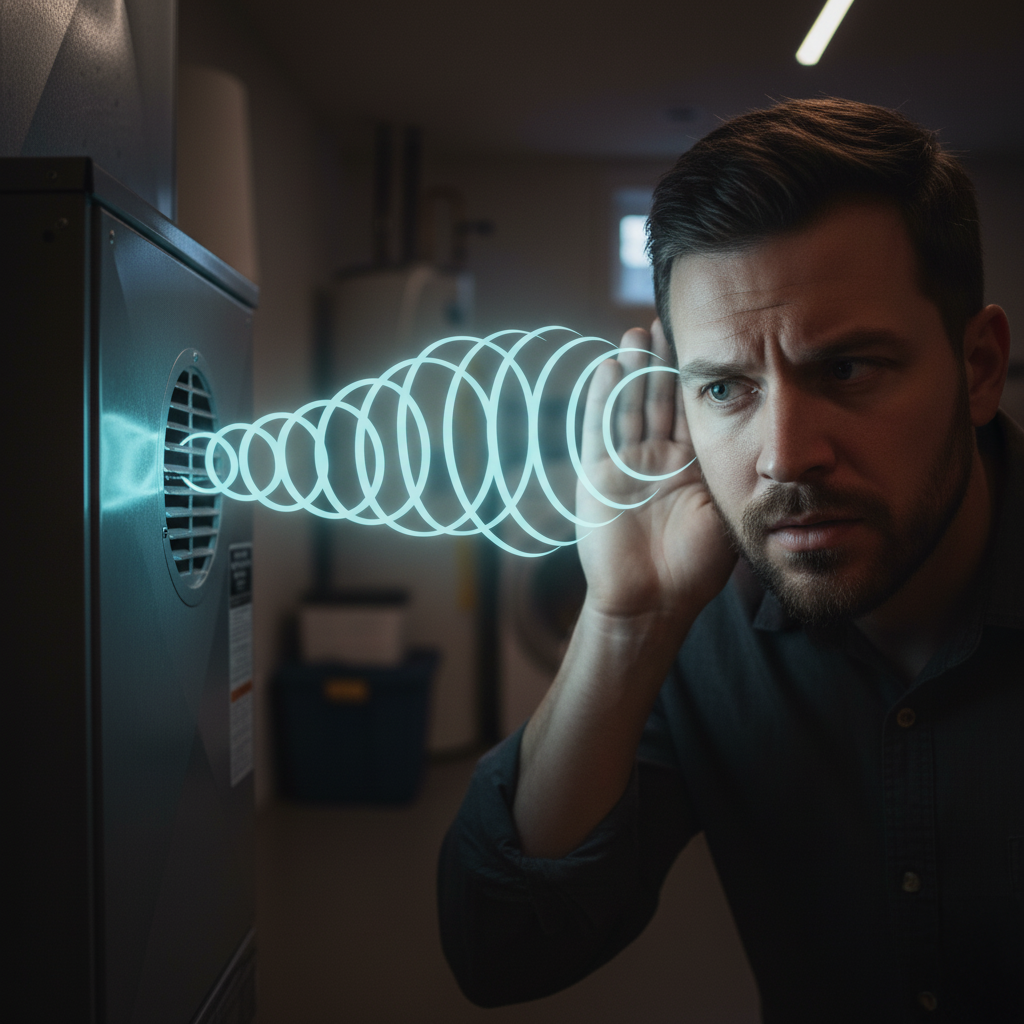
It's the middle of a Toronto winter night, and suddenly you hear it—a loud bang from your furnace room. Or maybe your furnace has started squealing like a distressed animal every time it kicks on. These sounds aren't just annoying; they're your furnace's way of telling you something is wrong.
As HVAC professionals serving Toronto homeowners, we get emergency calls about furnace noises almost daily during winter. While some sounds are harmless quirks, others signal serious problems that need immediate attention. Here's what your furnace is trying to tell you—and whether you need to call for help right away.
1. Banging or Booming Sounds
What It Sounds Like
A loud BANG or boom when your furnace first ignites, sometimes strong enough to rattle nearby objects or even be felt throughout the house.
What Causes It
Delayed ignition is almost always the culprit. Here's what happens:
- Gas builds up in the combustion chamber before igniting
- When ignition finally occurs, the accumulated gas ignites all at once
- This creates a mini-explosion inside your furnace
- The result is that distinctive banging or booming sound
Common causes of delayed ignition:
- Dirty or corroded burners preventing normal ignition
- Faulty igniter that sparks inconsistently
- Gas pressure issues
- Dirty flame sensor
Urgency Level: HIGH
This is one of the most serious furnace problems Toronto homeowners face. Repeated delayed ignition can:
- Crack your heat exchanger (a $1,500-3,000 repair, often requiring furnace replacement)
- Damage other furnace components
- Create carbon monoxide risks if the heat exchanger cracks
- Pose a safety hazard from repeated mini-explosions
DIY vs. Professional
Do NOT attempt DIY fixes. Delayed ignition involves gas combustion and requires professional diagnosis and repair. Turn off your furnace and call an HVAC technician immediately.
Temporary safety measure: If you hear banging during startup, turn off your furnace at the breaker and thermostat, then call for emergency service. Use space heaters (safely) until repairs are made.
2. Squealing or Screeching Sounds
What It Sounds Like
A high-pitched squeal or screech, similar to a car with bad brakes. May occur continuously while the furnace runs, or only during startup.
What Causes It
Belt issues are the primary cause in older furnaces (those with belt-driven blowers):
- Worn, cracked, or frayed blower belt slipping on pulleys
- Belt stretched out from age or heat exposure
- Misaligned belt or pulleys
- Belt that's too loose or too tight
Other possible causes:
- Blower motor bearings that need lubrication
- Worn motor bearings requiring replacement
- Direct-drive blower motor issues (in newer furnaces without belts)
Urgency Level: MEDIUM
While not an immediate emergency, squealing shouldn't be ignored:
- A worn belt can snap, leaving you without heat mid-winter
- Failing motor bearings will eventually seize, requiring expensive motor replacement
- The longer you wait, the more expensive repairs become
In Toronto winters, losing heat even for 24 hours while waiting for emergency service (and paying emergency rates) is something you want to avoid.
DIY vs. Professional
Possible DIY if you're handy: Replacing a furnace belt is relatively simple for mechanically inclined homeowners. Belts cost $15-30 at hardware stores, and there are good online tutorials.
Steps:
- Turn off power to furnace at breaker
- Note how old belt is routed around pulleys
- Remove old belt
- Install new belt following same routing
- Ensure proper tension (should depress 1/2-3/4 inch when pressed)
Call a professional if:
- You're not comfortable working with mechanical systems
- Your furnace is a newer direct-drive model (no belt)
- Squealing continues after belt replacement (indicates motor bearing issues)
- You notice any other unusual symptoms
3. Rattling Sounds
What It Sounds Like
A rattling, vibrating sound that may come and go, or increase/decrease with airflow intensity. Can range from subtle to quite loud.
What Causes It
Loose parts are the usual suspects:
- Loose ductwork connections or sheet metal screws
- Unsecured furnace panels or covers
- Loose blower wheel or fan blades
- Motor mount screws that have vibrated loose
- Loose heat exchanger (serious issue)
Less common causes:
- Debris inside ductwork or blower compartment
- Unbalanced blower wheel
- Worn mounting brackets
Urgency Level: LOW to MEDIUM
Rattling urgency depends on the source:
- Loose panels or ductwork: Low urgency, but should be fixed to prevent worse problems
- Loose blower components: Medium urgency—can lead to damage if blower wheel strikes housing
- Heat exchanger rattle: High urgency—may indicate cracks or severe wear
DIY vs. Professional
Good for DIY investigation: Many rattling issues are simple fixes:
- Turn off furnace
- Inspect access panels—ensure all screws are tight
- Check visible ductwork for loose connections
- Tighten any loose screws you find
- Turn furnace back on and listen
Call a professional if:
- Rattling comes from inside the blower compartment
- You can't locate the source
- Tightening accessible parts doesn't solve the problem
- Rattling is accompanied by reduced airflow or heating performance
4. Humming or Buzzing Sounds
What It Sounds Like
A steady electrical humming or buzzing, often with a specific frequency (50-60 Hz hum). May be constant or intermittent.
What Causes It
Electrical issues are the primary cause:
- Failing blower motor capacitor (stores electrical charge to start motor)
- Loose electrical connections creating arcing
- Faulty transformer (steps down voltage for controls)
- Worn motor bearings creating electromagnetic noise
- Failed relay or contractor
Urgency Level: MEDIUM to HIGH
Electrical problems shouldn't be taken lightly:
- A failing capacitor will eventually prevent your blower from starting—no heat
- Loose connections can cause fire hazards
- Failed electrical components can damage other furnace parts
- Toronto's extreme winter temperatures make furnace failure more than an inconvenience
If humming is accompanied by burning smells, shut down your furnace immediately and call for emergency service.
DIY vs. Professional
Do NOT attempt DIY repairs. Furnace electrical systems involve both high and low voltage components. Incorrect repairs can cause:
- Electric shock hazards
- Fire risks
- Damage to expensive control boards
- Voided warranties
What you can do: Note when the humming occurs (startup, continuously, when blower runs, etc.) and report this information when calling for service. This helps technicians diagnose the issue faster.
5. Scraping or Metal-on-Metal Sounds
What It Sounds Like
A harsh scraping or grinding sound of metal dragging on metal. Often rhythmic, matching blower wheel rotation.
What Causes It
Blower wheel problems:
- Blower wheel has come loose and is hitting the housing
- Broken or damaged blower wheel blades
- Worn motor bearings allowing shaft to wobble
- Foreign object stuck in blower assembly
- Bent or misaligned blower wheel
Urgency Level: HIGH
This sound indicates metal components are physically contacting each other—damage is actively occurring:
- Continued operation can destroy the blower wheel (expensive to replace)
- Can damage blower motor
- May puncture or crack the blower housing
- Flying metal debris inside furnace can damage other components
Shut down your furnace immediately if you hear metal-on-metal scraping. Turn it off at both the thermostat and circuit breaker.
DIY vs. Professional
Professional repair required. Blower wheel issues involve disassembling the blower assembly, which requires:
- Specialized tools
- Knowledge of proper reassembly and alignment
- Ability to diagnose why the wheel came loose (worn bearings, loose set screw, etc.)
- Replacement parts that may need to be ordered
Hearing Strange Furnace Noises?
Don't wait for a small problem to become a major breakdown in the middle of Toronto's coldest weather. Aire Master Heating and Cooling provides fast, reliable furnace diagnosis and repair throughout Toronto and the GTA.
Our certified technicians can quickly identify the source of furnace noises and provide honest recommendations about whether repair or replacement makes the most sense for your situation.
Call us today at (416) 995-4747 or request service online. We offer 24/7 emergency service for urgent heating issues.
Toronto Winter Safety Considerations
Living in Toronto means your furnace isn't optional—it's essential for safety. Here are critical safety reminders:
Never Ignore These Warning Signs
- Gas odors: Even faint gas smells require immediate attention. Evacuate and call your gas company's emergency line (416-752-0008 for Enbridge in Toronto)
- Yellow or flickering flames: Should be steady blue. Yellow flames indicate incomplete combustion and potential carbon monoxide production
- Soot around furnace: Sign of combustion problems
- Increased humidity or condensation on windows: May indicate venting problems
- Physical symptoms: Headaches, dizziness, nausea when furnace runs could indicate carbon monoxide exposure
Carbon Monoxide Protection
Ontario law requires carbon monoxide detectors near all sleeping areas. Test them monthly and replace batteries annually. Replace the entire unit every 7-10 years.
If your CO detector alarms, treat it as a real emergency:
- Evacuate everyone immediately
- Call 911 from outside
- Don't re-enter until emergency responders clear your home
When to Call for Emergency Service
Toronto winter furnace failures aren't just inconvenient—they're potentially dangerous. Call for emergency service if:
- Your furnace has completely stopped working
- You hear banging/booming (delayed ignition)
- You hear metal-on-metal scraping
- You smell gas
- You notice any signs of carbon monoxide issues
- Indoor temperature drops below 15°C (risk of frozen pipes)
Prevention is cheaper than emergency repairs: Emergency service calls during Toronto cold snaps can cost 50-100% more than regular service appointments. Regular maintenance catches these problems before they leave you without heat at the worst possible time.
Final Thoughts
Your furnace shouldn't sound like a percussion section. While some operational sounds are normal—a quiet whoosh of ignition, gentle airflow, occasional clicking of thermostats—loud or unusual noises always mean something is wrong.
The good news? Most furnace noise issues are fixable, and catching them early prevents expensive failures. Don't wait until your furnace gives up completely on the coldest night of the year. If your furnace is talking to you through strange sounds, listen—and call a professional before a minor issue becomes a major problem.
Toronto winters are unforgiving. Your furnace works hard to keep you and your family safe and comfortable. Return the favor by addressing problems promptly, maintaining it properly, and never ignoring warning signs.