When it's time to replace your home heating system in Toronto, you're faced with a critical decision: stick with a traditional furnace or switch to a heat pump? With energy costs rising and climate concerns growing, this choice has never been more important—or more confusing.
The truth is, there's no one-size-fits-all answer. Toronto's harsh winter climate creates unique challenges that don't exist in milder regions where heat pumps are increasingly popular. As HVAC professionals serving Toronto homeowners, we're here to give you the straight facts about both systems so you can make the right choice for your home.
How Each System Works
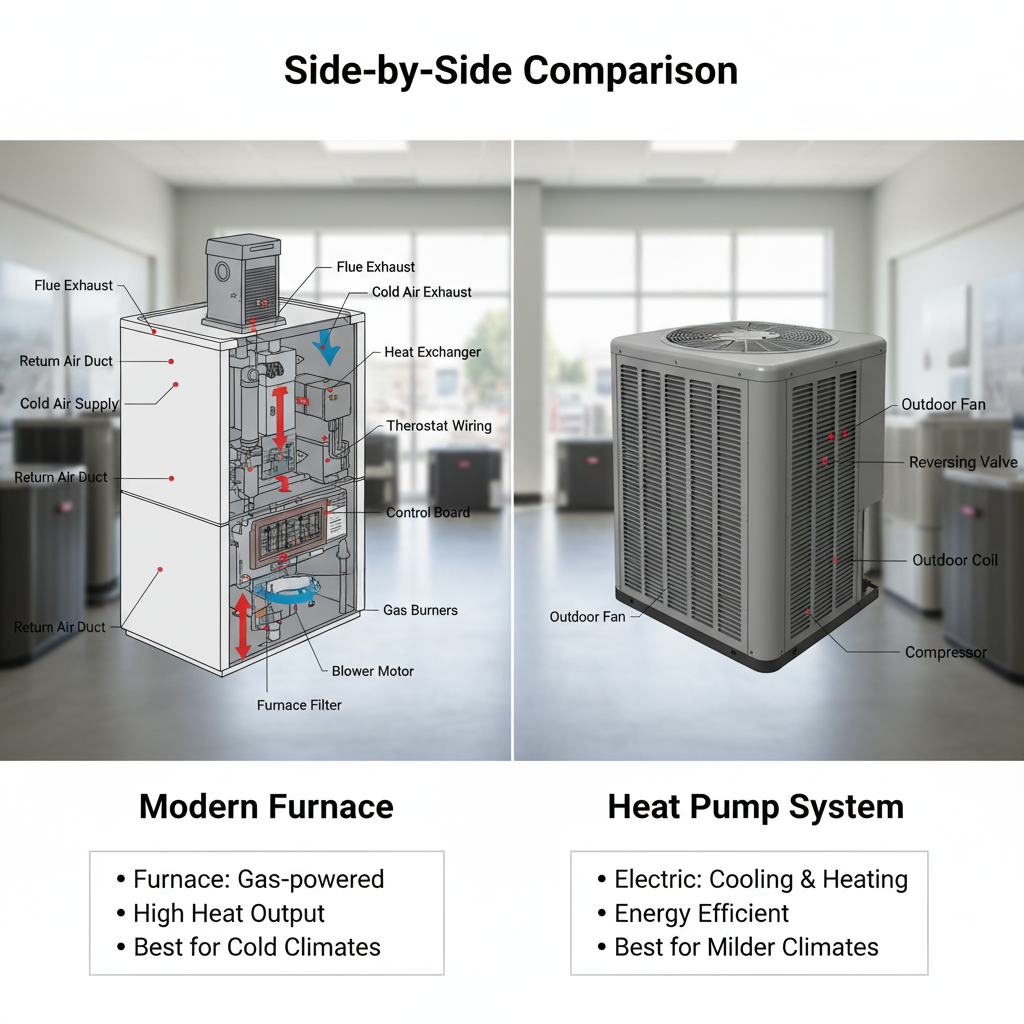
Gas Furnaces: Combustion Heating
Gas furnaces generate heat through combustion—burning natural gas to create warm air that's distributed throughout your home via ductwork. The process is straightforward:
- Natural gas burns in the combustion chamber
- Heat exchanger warms air from your home
- Blower fan distributes heated air through ducts
- Exhaust gases vent outside
Modern high-efficiency furnaces capture and reuse heat from exhaust gases, achieving efficiency ratings of 90-98% AFUE (Annual Fuel Utilization Efficiency). This means 90-98% of the fuel you pay for becomes usable heat.
Heat Pumps: Heat Transfer Technology
Heat pumps don't generate heat—they move it from one place to another, similar to how your refrigerator works in reverse. Here's the process:
- Outdoor unit extracts heat from outside air (yes, even cold air contains heat energy)
- Refrigerant absorbs this heat and carries it indoors
- Indoor unit releases heat into your home
- In summer, the process reverses for air conditioning
Because heat pumps move heat rather than create it, they can deliver 2-3 times more heat energy than the electricity they consume—potentially very efficient under the right conditions.
Upfront Costs: Initial Investment Comparison
Let's talk numbers for typical Toronto home installations:
Gas Furnace Installation
- Mid-efficiency (80-85% AFUE): $3,000-4,500 installed
- High-efficiency (90-95% AFUE): $4,000-6,000 installed
- Premium high-efficiency (95-98% AFUE): $5,500-7,500 installed
Factors affecting cost: Home size, ductwork condition, venting requirements, brand/model selection
Heat Pump Installation
- Air-source heat pump (standard): $5,000-8,000 installed
- Cold-climate heat pump: $7,000-12,000 installed
- Dual-fuel system (heat pump + furnace backup): $8,000-15,000 installed
Factors affecting cost: System capacity, cold-weather performance rating, backup heating needs, electrical upgrades
Initial cost winner: Gas Furnace - Typically $2,000-5,000 less expensive to install
Operating Costs: Where the Real Money Goes
Installation is a one-time expense, but you'll pay operating costs for 15-20 years. Here's where Toronto's climate significantly impacts the equation:
Gas Furnace Operating Costs
For a typical 1,800 sq ft Toronto home with a 95% efficient furnace:
- Average winter (Oct-Mar): $900-1,200 in natural gas
- Annual heating cost: $900-1,200
- Cost per winter month: $150-200
Natural gas in Toronto currently costs approximately $0.10-0.15 per cubic meter, making it one of the most economical heating fuels available.
Heat Pump Operating Costs
For the same 1,800 sq ft home with a cold-climate heat pump:
- Mild months (Oct, Nov, Mar, Apr): $80-120/month in electricity
- Cold months (Dec, Jan, Feb at -10°C to -20°C): $200-350/month
- With backup electric resistance heat: Add $100-200/month during cold snaps
- Annual heating cost: $1,200-1,800
The challenge? Heat pump efficiency drops dramatically as outdoor temperatures fall. At -15°C, a heat pump's efficiency can be 50% lower than at 0°C, and below -20°C (common in Toronto), many systems struggle to meet heating demands without costly backup resistance heating.
Operating cost winner: Gas Furnace - Generally $300-600 less per year to operate in Toronto's climate
Efficiency in Toronto's Cold Climate
This is where the rubber meets the road for Toronto homeowners.
Gas Furnace Performance
- Consistent efficiency regardless of outdoor temperature
- 95% efficient furnace delivers 95% efficiency at -30°C just like at 0°C
- Reliable heat output even during the coldest Toronto cold snaps
- No performance degradation over time due to weather
Heat Pump Performance in Extreme Cold
Here's the reality for Toronto winters:
- Above 0°C: Excellent efficiency (COP of 3.0-4.0, meaning 300-400% efficiency)
- 0°C to -10°C: Good efficiency (COP of 2.0-2.5, or 200-250%)
- -10°C to -20°C: Reduced efficiency (COP of 1.5-2.0, or 150-200%)
- Below -20°C: Significantly reduced (COP of 1.0-1.5, or 100-150%)
Toronto experiences 30-40 days annually with temperatures below -10°C and 10-15 days below -20°C. During these coldest periods—precisely when you need heat most—heat pump efficiency is at its lowest, and many systems require supplemental heating.
Cold weather efficiency winner: Gas Furnace - Consistent, reliable performance regardless of temperature
Lifespan and Durability
Gas Furnaces
- Average lifespan: 15-20 years
- With excellent maintenance: 20-25 years
- Durability factors: Fewer outdoor components exposed to harsh weather, proven technology
Heat Pumps
- Average lifespan: 12-15 years
- With excellent maintenance: 15-18 years
- Durability factors: Outdoor components exposed to Toronto's freeze-thaw cycles, ice/snow buildup stress, more complex mechanical systems
Toronto's harsh winters—with frequent freeze-thaw cycles, ice storms, and extreme temperature swings—take a toll on heat pump outdoor units. The systems work hardest precisely during the most punishing weather conditions.
Lifespan winner: Gas Furnace - Typically lasts 3-7 years longer in Toronto's climate
Maintenance Requirements and Costs
Gas Furnace Maintenance
Annual professional service: $150-200
- Burner cleaning and adjustment
- Heat exchanger inspection
- Safety checks (gas leaks, carbon monoxide)
- Filter replacement
- Electrical connection testing
Homeowner tasks: Monthly filter checks/replacement during heating season
Heat Pump Maintenance
Annual professional service: $200-300
- Refrigerant level check
- Outdoor coil cleaning
- Indoor coil inspection
- Electrical testing
- Defrost cycle verification
- Winter weather preparation
Additional tasks:
- Clearing snow and ice from outdoor unit (ongoing in winter)
- Elevating outdoor unit above snow level
- Filter replacement monthly
- Spring and fall seasonal service often recommended
Maintenance winner: Gas Furnace - Lower annual costs, less hands-on winter maintenance
Comparison Table: At-a-Glance
| Factor | Gas Furnace | Heat Pump |
|---|---|---|
| Installation Cost | $3,000-7,500 | $5,000-15,000 |
| Annual Operating Cost | $900-1,200 | $1,200-1,800 |
| Efficiency at -20°C | 95% (consistent) | 100-150% (reduced) |
| Lifespan | 15-25 years | 12-18 years |
| Maintenance Cost | $150-200/year | $200-300/year |
| Cooling Capability | No (requires separate AC) | Yes (built-in) |
| Environmental Impact | Burns fossil fuel | Electric (cleaner if renewable energy) |
| Toronto Winter Performance | Excellent | Good to Fair |
Our Toronto-Specific Recommendation
After installing and servicing both systems in hundreds of Toronto homes, here's our professional take:
Gas Furnace is Best For:
- Most Toronto homeowners - The combination of lower upfront cost, lower operating costs, and consistent performance in extreme cold makes furnaces the practical choice
- Budget-conscious buyers - Both installation and operation are less expensive
- Homes with existing gas service - You're already set up for gas heating
- Those prioritizing reliability - No performance issues at -25°C
- Long-term homeowners - Longer lifespan and lower total cost of ownership
Heat Pump Might Work For:
- New construction without gas service - Avoids gas line installation costs
- Environmentally focused homeowners - Especially if you have or plan solar panels
- Homes needing both heating and AC replacement - One system does both
- Well-insulated, energy-efficient homes - Reduced heating demands make heat pumps more viable
- Those willing to invest in dual-fuel systems - Heat pump with gas furnace backup combines benefits of both
The Dual-Fuel Compromise
Can't decide? A dual-fuel system automatically switches between heat pump and furnace based on outdoor temperature and efficiency. The heat pump handles mild weather (saving money on shoulder seasons), while the furnace takes over during Toronto's coldest months (ensuring comfort and efficiency).
Cost: $8,000-15,000 installed
Benefit: Optimized efficiency year-round with maximum reliability
Best for: Those who want the environmental benefits of heat pumps with the reliability of furnaces
Not Sure Which System is Right for Your Home?
Every Toronto home is different, and the right heating solution depends on your specific situation, budget, and priorities. Aire Master Heating and Cooling offers free, no-pressure consultations to help you make the best choice.
Our certified technicians will assess your home's heating needs, current setup, and provide honest recommendations based on your circumstances—not what makes us the most money.
Call us today at (416) 995-4747 or schedule a free consultation online.
The Bottom Line for Toronto Homeowners
While heat pumps are gaining popularity across North America, Toronto's climate creates real challenges that shouldn't be overlooked. The extended heating season, frequent extreme cold, and wide temperature swings mean heating systems work harder here than in most other places.
For the majority of Toronto homeowners, a high-efficiency gas furnace remains the most cost-effective, reliable choice. You'll save money on installation, operation, and maintenance while enjoying consistent performance regardless of how cold it gets.
That said, heat pumps aren't wrong for everyone. If you're building new construction without gas access, prioritize environmental impact over cost, or are willing to invest in a dual-fuel system, a cold-climate heat pump could work well for your situation.
The key is making an informed decision based on your specific home, budget, and priorities—not just following trends from warmer climates where the calculations work out very differently.