Your furnace is probably one of the most important appliances in your Toronto home, yet most homeowners know surprisingly little about how it actually works. Understanding the basics of your heating system can help you maintain it better, troubleshoot minor issues, make informed repair decisions, and communicate more effectively with HVAC technicians.
This guide breaks down everything you need to know about residential furnaces in simple terms—no engineering degree required.
How Furnaces Work: The Basic Process
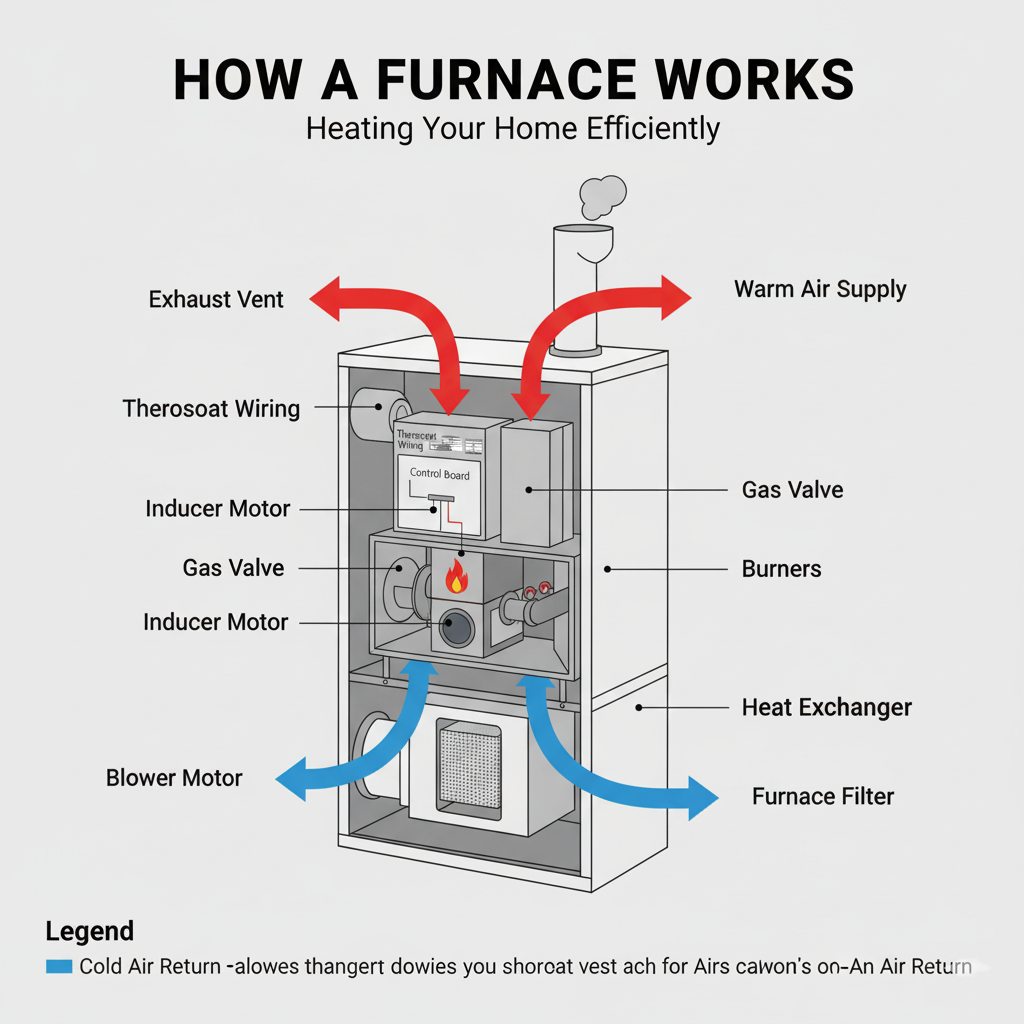
At its core, a furnace is a heat generation and distribution system. Here's what happens when your thermostat calls for heat:
The Heating Cycle (Simplified):
- Thermostat signals the furnace: When room temperature drops below your setpoint, the thermostat sends a signal to the furnace control board
- Ignition sequence begins: The furnace ignites its burner (gas, oil, or activates heating elements for electric)
- Heat exchanger warms up: Flames heat metal chambers called heat exchangers, which get extremely hot
- Blower activates: Once heat exchangers reach proper temperature, the blower fan turns on
- Air circulation: The blower pulls cool air from your home through return ducts, passes it over the hot heat exchangers, and pushes the warmed air through supply ducts to your rooms
- Exhaust vented: Combustion gases are safely vented outside through a flue pipe
- Cycle completes: When your thermostat is satisfied, the burner shuts off, the blower runs briefly to distribute remaining heat, then everything shuts down until the next call for heat
This entire cycle repeats throughout the day to maintain your desired temperature.
Main Furnace Components Explained
Understanding the key parts of your furnace helps you communicate problems to technicians and understand what they're talking about during service calls.
1. Heat Exchanger
What it does: The heat exchanger is a series of metal chambers or coils where combustion occurs and heat is transferred to the air circulating through your home.
Why it matters: This is the most critical safety component. If it cracks, dangerous carbon monoxide can leak into your home's air supply. Heat exchangers typically last 15-20 years but can fail earlier due to poor maintenance or oversized furnaces that cycle too frequently.
Signs of problems: Soot buildup, yellow burner flame instead of blue, carbon monoxide detector alarms, or visible cracks during inspection.
2. Burner
What it does: The burner creates the flame that heats the heat exchanger. Gas furnaces have gas burners, oil furnaces have oil burners, and electric furnaces have electric heating elements instead.
Why it matters: Clean burners produce efficient, complete combustion with a steady blue flame. Dirty burners waste fuel and can produce carbon monoxide.
Signs of problems: Yellow or orange flame, uneven flame pattern, soot accumulation, or delayed ignition (where the burner doesn't light immediately).
3. Blower Motor and Fan
What it does: The blower is a large fan that circulates air throughout your home. It pulls cool air from return vents, pushes it past the heat exchanger, and sends warmed air to supply vents.
Why it matters: Without proper airflow, your furnace can overheat and shut down. The blower is one of the hardest-working components and commonly needs replacement after 15-20 years.
Types:
- Single-speed: Runs at full capacity when on (most common in older furnaces)
- Multi-speed: Can run at different speeds for better efficiency
- Variable-speed: Adjusts speed continuously for optimal comfort and efficiency (found in premium furnaces)
Signs of problems: Squealing or grinding noises, weak airflow, or no airflow at all.
4. Flame Sensor
What it does: This safety device detects whether the burner has successfully ignited. If it doesn't sense a flame within a few seconds, it shuts off the gas valve to prevent dangerous gas buildup.
Why it matters: Flame sensors commonly get dirty or corroded, causing your furnace to ignite briefly then shut down—one of the most common service calls.
Signs of problems: Furnace starts then shuts off after a few seconds, repeated ignition attempts.
5. Igniter
What it does: Modern furnaces use electronic igniters (hot surface ignition or spark ignition) instead of standing pilot lights. The igniter lights the gas when the thermostat calls for heat.
Why it matters: A failed igniter means no heat. They're relatively inexpensive to replace but are a common wear item.
Signs of problems: Clicking sounds but no ignition, furnace won't start, error codes on the control board.
6. Limit Switch
What it does: This safety device monitors the temperature inside the furnace. If it gets too hot (usually due to restricted airflow), the limit switch shuts down the burner to prevent damage or fire.
Why it matters: A tripped limit switch often indicates a dirty filter, blocked vents, or blower problems that need addressing.
Signs of problems: Furnace cycles on and off frequently, blower runs continuously, or burner won't stay lit.
7. Control Board
What it does: The "brain" of your furnace, the control board manages the heating cycle, safety lockouts, and displays error codes for troubleshooting.
Why it matters: Modern control boards provide diagnostic capabilities, making repairs easier. However, they can fail due to power surges or age.
Signs of problems: Furnace won't respond to thermostat, error codes flashing, erratic behavior.
Types of Furnaces Common in Toronto Homes
Natural Gas Furnaces
Most common in: 85%+ of Toronto homes
How they work: Burn natural gas from Enbridge pipelines to create heat
Pros:
- Lowest operating costs in Toronto
- Natural gas infrastructure widely available
- Fast, effective heating even in extreme cold
- Long lifespan (15-20+ years)
Cons:
- Requires gas line connection
- Carbon monoxide risk if poorly maintained
- Not carbon-neutral
Best for: Most Toronto homeowners due to cost-effectiveness and reliability
Electric Furnaces
Most common in: Condos, apartments, areas without gas service
How they work: Use electric heating elements (like a giant toaster) to warm air
Pros:
- No combustion means no carbon monoxide risk
- Lower installation cost (no venting required)
- 100% efficient at converting electricity to heat
- Compact size ideal for small spaces
Cons:
- Very high operating costs (electricity more expensive than gas)
- Less effective in extreme cold
- Can strain electrical systems
Best for: Homes without gas access, secondary heating zones
Oil Furnaces
Most common in: Older homes, rural areas near Toronto
How they work: Burn heating oil stored in tank to create heat
Pros:
- Works anywhere (no gas line needed)
- Very hot flames provide excellent heating
- Fuel can be stored on-site
Cons:
- Highest operating costs
- Requires oil tank maintenance and delivery
- More maintenance than gas furnaces
- Environmental concerns with tank leaks
Best for: Rural properties, older homes (though most convert to gas when possible)
Understanding AFUE: Efficiency Ratings Explained
When shopping for a furnace, you'll see AFUE ratings. Here's what they mean:
AFUE (Annual Fuel Utilization Efficiency) measures how much of your fuel actually heats your home versus how much goes up the chimney.
AFUE Rating Breakdown:
- 60-70% AFUE: Very old furnaces (pre-1990s). For every $100 in gas, only $60-70 heats your home
- 80% AFUE: Standard efficiency (minimum allowed in Canada). $80 of every $100 heats your home
- 90-95% AFUE: Mid-efficiency furnaces. $90-95 heats your home
- 95-98% AFUE: High-efficiency condensing furnaces. Up to $98 of every $100 heats your home
What "Condensing" Means:
High-efficiency furnaces (90%+ AFUE) are called "condensing" furnaces because they extract so much heat from combustion gases that water vapor condenses out—just like your breath on a cold window.
You can identify a condensing furnace by:
- PVC plastic vent pipes instead of metal chimney
- Condensate drain line (small plastic tube)
- Second heat exchanger for additional heat extraction
Efficiency Impact on Toronto Heating Bills:
Average 2,000 sq ft Toronto home annual heating cost:
- 60% AFUE old furnace: $2,400/year
- 80% AFUE standard: $1,800/year
- 95% AFUE high-efficiency: $1,520/year
Upgrading from a 60% to 95% furnace saves $880/year—paying for itself in 5-7 years.
The Furnace-Thermostat Relationship
Your thermostat and furnace work together as a team. Understanding this relationship helps you troubleshoot issues:
How They Communicate:
Simple thermostats: Complete an electrical circuit when heat is needed, telling the furnace to turn on
Smart thermostats: Send more complex signals including temperature setpoints, fan speeds, and operational modes
Common Thermostat-Related Issues:
- Dead batteries: Most common cause of "furnace not working"
- Wrong settings: Set to "cool" instead of "heat," or fan set to "on" instead of "auto"
- Location problems: Thermostat in drafty area or direct sunlight gives false readings
- Wiring issues: Loose connections prevent proper communication
Need Help Understanding Your Furnace?
Whether you're dealing with strange noises, inconsistent heating, or just want to ensure your furnace is running optimally, Aire Master Heating and Cooling is here to help Toronto homeowners. Our technicians can explain what's happening with your specific system and provide honest recommendations.
Call us at (416) 995-4747 or schedule an inspection online.
Basic Troubleshooting for Common Issues
Before calling for service, try these simple troubleshooting steps:
Issue: Furnace Won't Turn On
Check:
- Thermostat has fresh batteries
- Thermostat is set to "heat" and temperature is set higher than current room temperature
- Furnace power switch is on (looks like a light switch near furnace)
- Circuit breaker hasn't tripped
- Furnace door is fully closed (safety switch prevents operation if open)
Issue: Furnace Runs But No Heat
Check:
- Air filter isn't completely clogged
- Supply vents throughout house are open
- Gas valve to furnace is open (handle parallel to pipe)
- Pilot light is lit (older furnaces only)
Issue: Furnace Starts Then Shuts Off
Likely causes:
- Dirty flame sensor (most common)
- Restricted airflow from dirty filter
- Oversized furnace short-cycling
Action: Check and replace filter. If problem persists, call for service.
Issue: Some Rooms Cold, Others Warm
Check:
- Vents in cold rooms are fully open
- Furniture or curtains aren't blocking vents
- Return air vents aren't blocked
- Doors to cold rooms are open (closed doors trap cold air)
Issue: Furnace Is Noisy
Different noises mean different things:
- Rumbling or roaring: Burner may need cleaning or adjustment
- Squealing or screeching: Blower belt or motor bearings need attention
- Banging when starting: Delayed ignition (dirty burners or gas pressure issue)
- Rattling: Loose panels, ductwork, or components
When to Call a Professional:
Don't attempt DIY repairs if you notice:
- Gas odor (call gas company emergency line immediately)
- Carbon monoxide detector alarm
- Yellow or orange burner flame
- Visible cracks in heat exchanger
- Water pooling around furnace
- Repeated safety lockouts
Maximizing Your Furnace's Lifespan
Now that you understand how your furnace works, here are the best practices for keeping it running longer:
- Change filters regularly: Every 1-3 months during heating season
- Schedule annual maintenance: Professional tune-ups in early fall
- Keep area clear: 2-3 feet clearance around furnace
- Don't close too many vents: Increases pressure on system
- Address issues promptly: Small problems become expensive repairs
- Clear exterior vents: Remove snow and ice from intake/exhaust pipes
Final Thoughts
Understanding how your furnace works empowers you to maintain it better, spot problems early, and make informed decisions about repairs and replacements. While you don't need to become an HVAC expert, knowing the basic components and functions helps you be a better-informed homeowner.
Remember: your furnace is a complex appliance with safety-critical components. While basic maintenance like filter changes is simple DIY work, most repairs should be left to licensed professionals. The money you save by understanding your system comes from better maintenance, not risky DIY repairs.
When in doubt, ask questions. A good HVAC technician will be happy to explain what they're doing and why—helping you learn more about this essential system that keeps your Toronto home comfortable all winter long.